ERP that matches how a factory actually runs.
One source of truth for the floor and the boardroom.
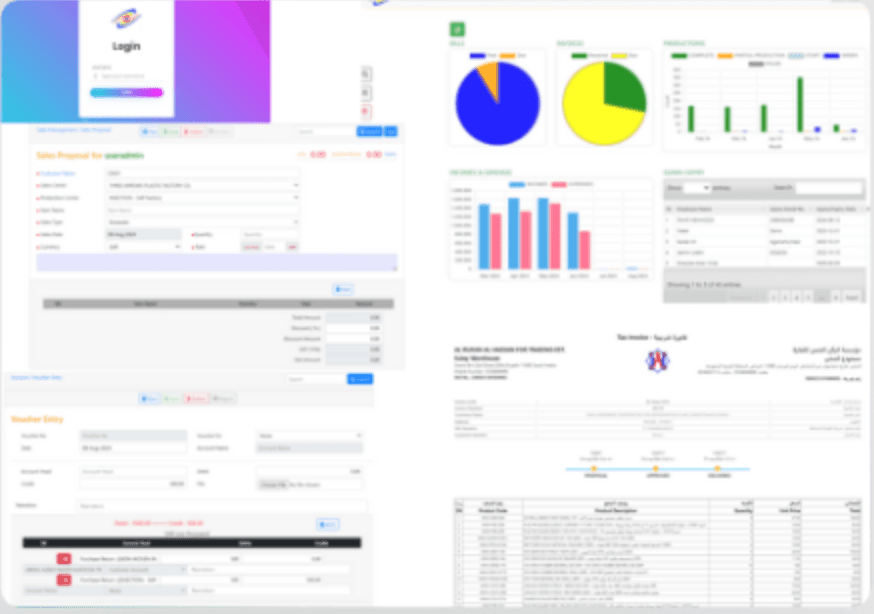
Generic ERP arrives with opinions about your factory
Most ERP implementations fail in the same place: the system assumes a process, the floor has a different one, and the gap fills with spreadsheets. Within a year the ERP holds the official numbers and the spreadsheets hold the real ones.
Guru ERP was built inside manufacturing environments, not adapted to them afterwards. The workaround on a supervisor's desktop is not a discipline problem. It is the requirement nobody wrote down, and a replacement that ignores it gets worked around within a month.
What Guru ERP covers
Manufacturing and operational businesses often struggle with disconnected processes and fragmented information.
Manufacturing operations
Procurement
Inventory
Production
Finance
Operational reporting
Guru ERP brings critical business workflows into one connected system, giving teams a clearer view of operations and helping leaders make decisions with better information.
Where it runs
In production, in two countries.
One codebase, two industries, two tax regimes. That is the test an ERP either passes or quietly fails.
Guru ERP went live in Riyadh, Saudi Arabia, on the production floor of a plastics manufacturer. It covers production planning, inventory, procurement, finance and HR across a single facility.
The same system went live in Dubai, United Arab Emirates, at a trading company, configured differently: sales, procurement, HR, accounts and UAE VAT. One codebase, two industries, two tax regimes.
Neither client is named here. Both are described accurately, and neither has been asked for permission to be identified.
We own and operate Guru ERP rather than reselling it, which means we are the ones on the call when a month-end close does not reconcile. See ownership and handover for what that means contractually, or the other five systems.
You do not need to arrive with a perfect technical specification.
Start with the problem. Tell us what is slowing the business down, what you want to build, or where the current system is failing. We will tell you the shortest path forward, including when that path is not us.
Talk to us